Triple Weighted ATR
Takes linear weighted averages of the true range over three periods and further takes a simple average of each. Orange, light blue and blue indicate the input sets, not price direction.
Coming soon · MT5 only · no licence file needed
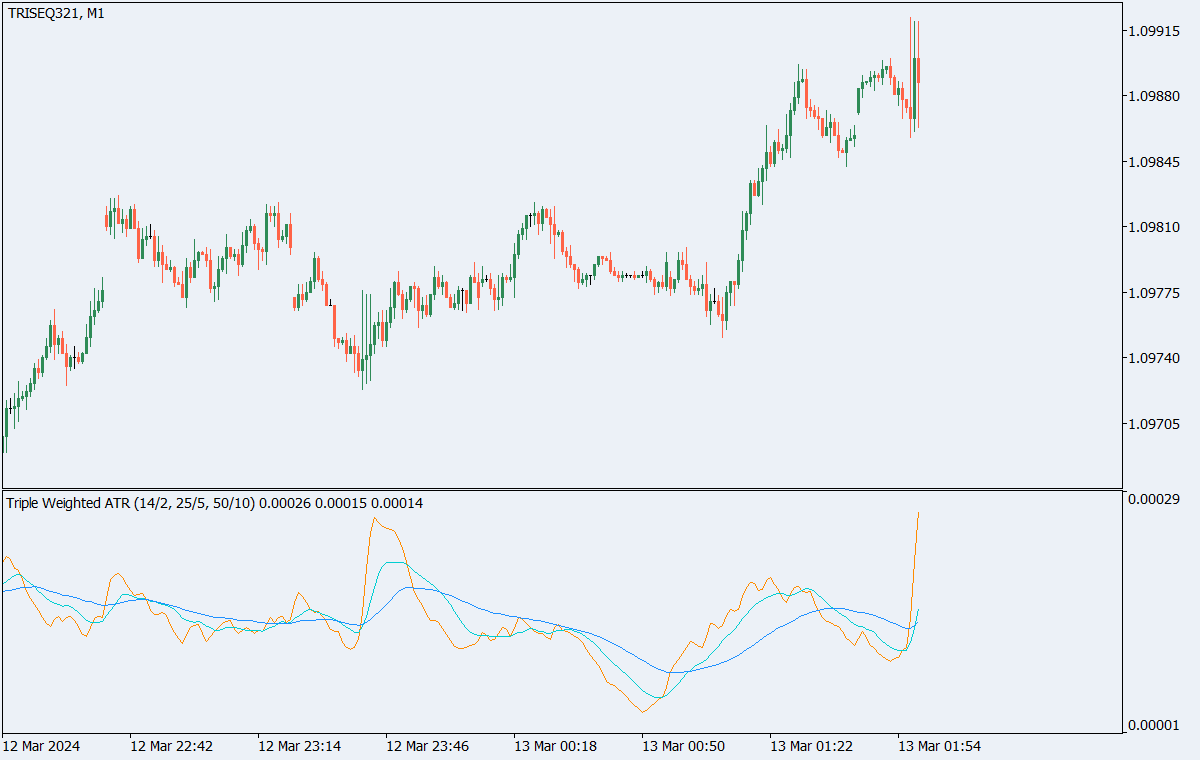
Examples with changed settings are in the manual.
Main settings
| Input | Default |
|---|---|
| Period 1 | 14 |
| Smoothing 1 | 2 |
| Period 2 | 25 |
| Smoothing 2 | 5 |
| Period 3 | 50 |
| Smoothing 3 | 10 |
Usage specifications
Forming bar
Values and drawing change with the latest bar's high, low and close. They are also recalculated when history is added or corrected or settings change.
Conditions for comparison
Compare with the same symbol, timeframe, period and loaded history. The display is not a forecast of future prices.
Starting position
Each line starts from bar Period+Smoothing−1. The 3 default lines are displayed from the 15th, 29th and 59th bars.
Difference from the standard
The averaging method differs from the simple average of the MT5 standard ATR. The colors of the 3 lines are not a ranking of strength.
Only 1 instance of the same product on 1 chart
This manual describes adding 1 instance of this product to 1 chart. To compare different settings, use separate charts.
For on-screen display only
This product shows calculation results through plot buffers and does not place orders. It does not guarantee profit or future price movement.
Full manual
How to read the display, the settings, installation and what to check when something goes wrong, on one page. The product is in preparation for release; the manual is published so that you can review its content.
- MT5 display and examples of changed settings
- How to read it in 30 seconds
- What it measures
- Situations for reading the display
- Steps for checking the display
- Installation and checking the package contents
- Settings
- Usage specifications
- Troubleshooting and usage notes
- Technical information and specification details