Oscillator Side Averages
Compares the difference of a short and a long SMA with average lines for the positive side and the negative side.
Coming soon · MT5 only · no licence file needed
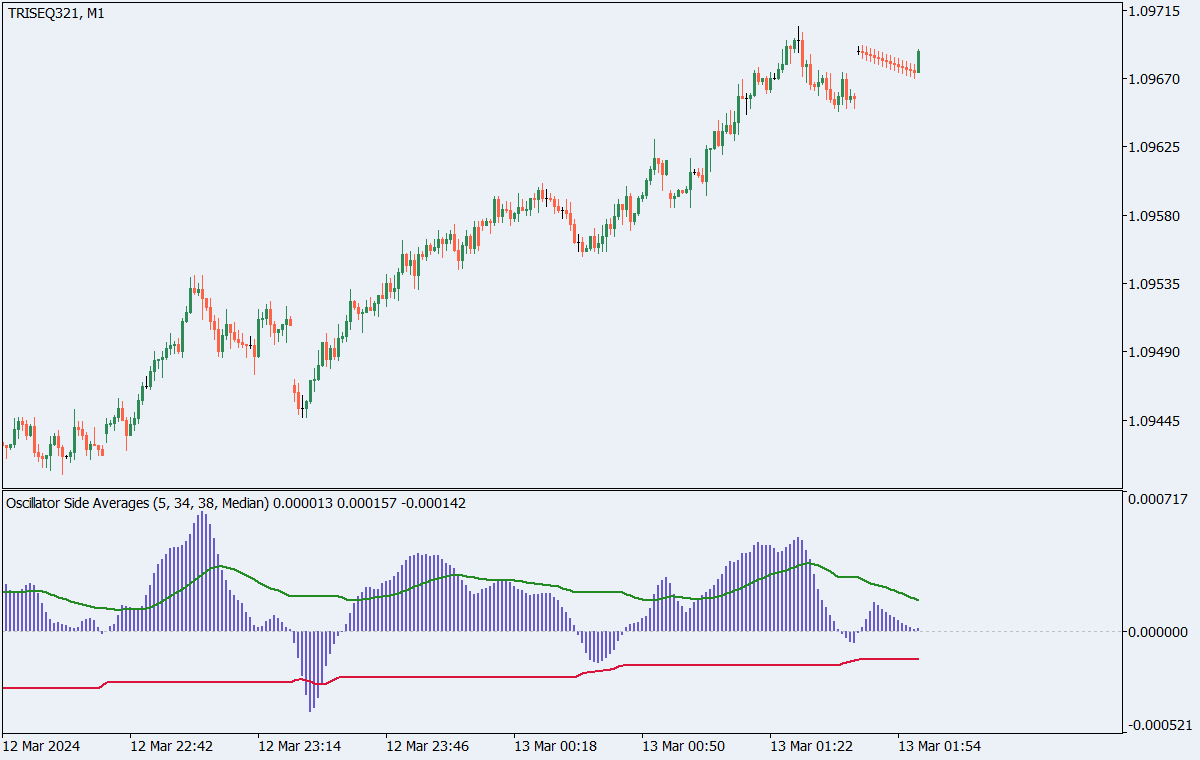
Examples with changed settings are in the manual.
Main settings
| Input | Default |
|---|---|
| Fast Period | 5 |
| Slow Period | 34 |
| Side Average Period | 38 |
| Applied Price | Median (High + Low) ÷ 2 |
Usage specifications
Initial section
The bars start displaying at the Slow-th bar from the oldest. The positive-side and negative-side averages each start after their first applicable value appears.
0 and the forming bar
Exactly 0 goes to the positive side. Price changes on the current bar can switch the side, and the display also changes.
No notifications
There are no alerts or orders. It is not a product that reproduces the color switching of AO.
Only 1 instance of the same product on 1 chart
This manual describes adding 1 instance of this product to 1 chart. To compare different settings, use separate charts.
For on-screen display only
This product shows calculation results through plot buffers and does not place trade orders. It does not guarantee profit or future price movement.
Full manual
How to read the display, the settings, installation and what to check when something goes wrong, on one page. The product is in preparation for release; the manual is published so that you can review its content.
- MT5 display and examples of changed settings
- How to read it in 30 seconds
- What it measures
- Situations for reading the display
- Steps for checking the display
- Installation and checking the package contents
- Settings
- Usage specifications
- Troubleshooting and usage notes
- Technical information and specification details