Multi-Period Oscillator
Combines values calculated for four periods on the same timeframe into one line and shows the difference from its smoothed line as bars. The bar colour and the bar's sign carry different information.
Coming soon · MT5 only · no licence file needed
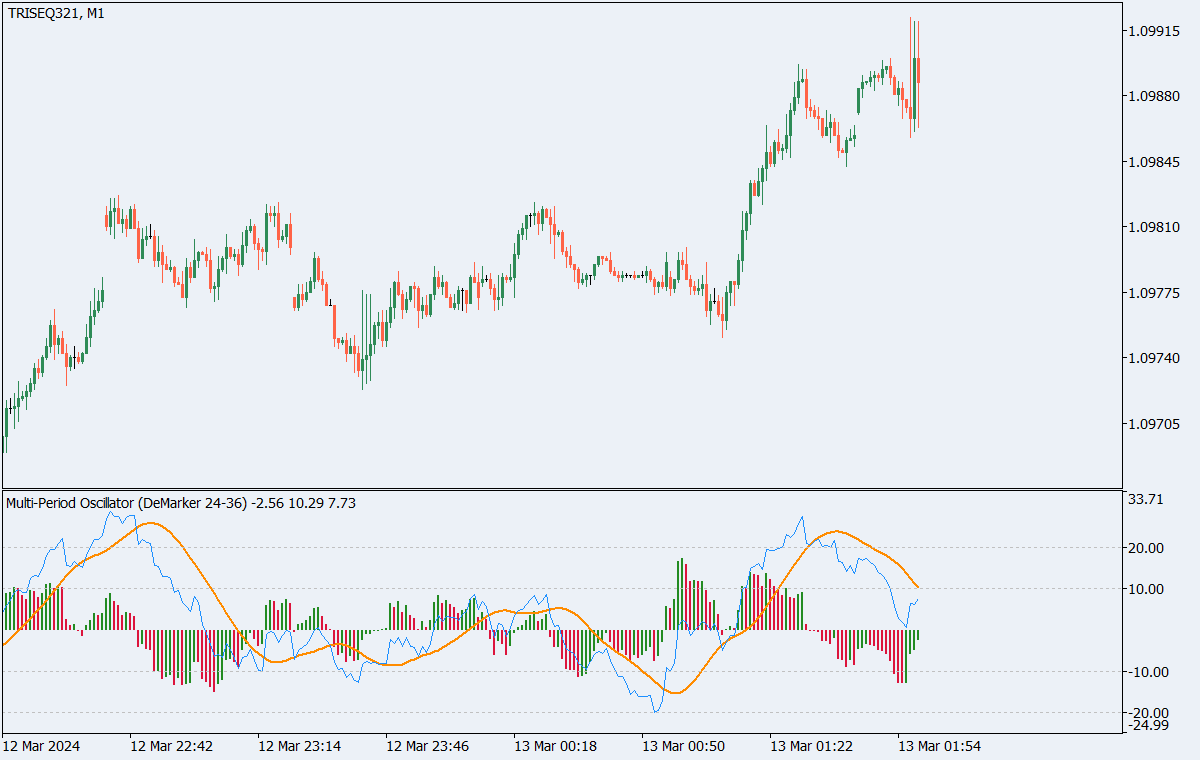
Examples with changed settings are in the manual.
Main settings
| Input | Default |
|---|---|
| Base | DeMarker |
| First Period | 24 |
| Period Step | 4 |
| RSI Applied Price | Weighted |
| T3 Factor (0 to 1) | 0.618 |
| Show Histogram | true |
| Show Cross Marks | false |
Usage specifications
Start of drawing
Lines and bars start from bar First Period + 3×Period Step + 1. The default is bar 37. The first point can appear 2 bars later, at bar 39.
Latest bar and points
Values and colors of the forming bar change. When the next bar starts, a point may be added to what was the latest bar. If the RSI applied price is Open, that bar's value does not change during the bar.
Effect of history
RSI and T3 carry over previous values. If the first loaded bar changes, values, colors and points on the older side may change.
Display and header
The vertical axis is automatic. The default header shows the bars, smoothed line and multi-period line, in that order. Point values are not shown in the header. Coefficients are not shown in the window name, so check them in the input fields.
Only 1 instance of the same product on 1 chart
This manual describes adding 1 instance of this product to 1 chart. To compare different settings, use separate charts.
For on-screen display only
Displays, marks and notifications are records of calculation results. They do not direct trading decisions and do not guarantee future price movements.
Full manual
How to read the display, the settings, installation and what to check when something goes wrong, on one page. The product is in preparation for release; the manual is published so that you can review its content.
- MT5 display and examples of changed settings
- How to read it in 30 seconds
- What it measures
- Situations for reading the display
- Steps for checking the display
- Installation and checking the package contents
- Settings
- Usage specifications
- Troubleshooting and usage notes
- Technical information and specification details