Higher Period HiLo
Averages the highs and lows of completed time periods and shows the lower or higher level as dots according to the state.
Coming soon · MT5 only · no licence file needed
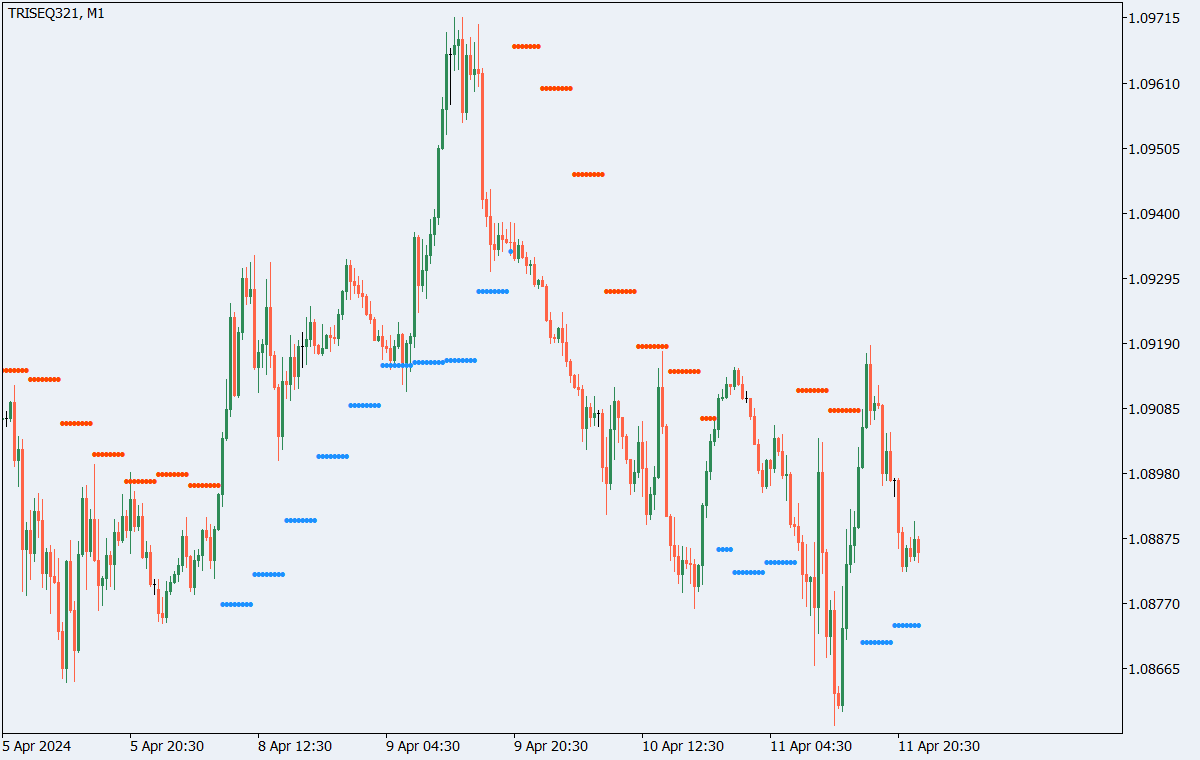
Examples with changed settings are in the manual.
Main settings
| Input | Default |
|---|---|
| Group the bars by | 4 hours |
| Completed groups averaged | 3 |
| Decide | On every bar (close against the levels) |
| Spread (points, group-start decision) | 0 |
| Show Trilogy brand and QR code | true |
| Brand position (chart corner) | Lower left |
| Brand horizontal offset (pixels) | 10 |
| Brand vertical offset (pixels) | 10 |
Usage specifications
Display only
Even if the name contains Stop or Signal, it does not place, modify or close orders. There are no notifications or emails either.
Unclosed bar and history
The current bar is updated. Values and the initial state can change with added history, the data provider, the symbol and the timeframe.
Points and price
A point is the smallest display unit of the symbol. It is not always the same as pips.
Brand display
Shows Produced by Trilogy Inc. and a QR code to https://www.trgy.co.jp/. When the same medium is used on the same chart, the display is shared. There is no account authentication.
For on-screen display only
The display is a record of calculation results. It does not direct trading decisions and does not guarantee future price movements.
Full manual
How to read the display, the settings, installation and what to check when something goes wrong, on one page. The product is in preparation for release; the manual is published so that you can review its content.
- MT5 display and examples of changed settings
- How to read it in 30 seconds
- What it measures
- Situations for reading the display
- Steps for checking the display
- Installation and checking the package contents
- Settings
- Usage specifications
- Troubleshooting and usage notes
- Technical information and specification details