Bull Bear True Range
Builds an upward and a downward range from the open, previous close, high and low, and averages each over the same period. Green and red are separate ranges and do not predict where price will go.
Coming soon · MT5 only · no licence file needed
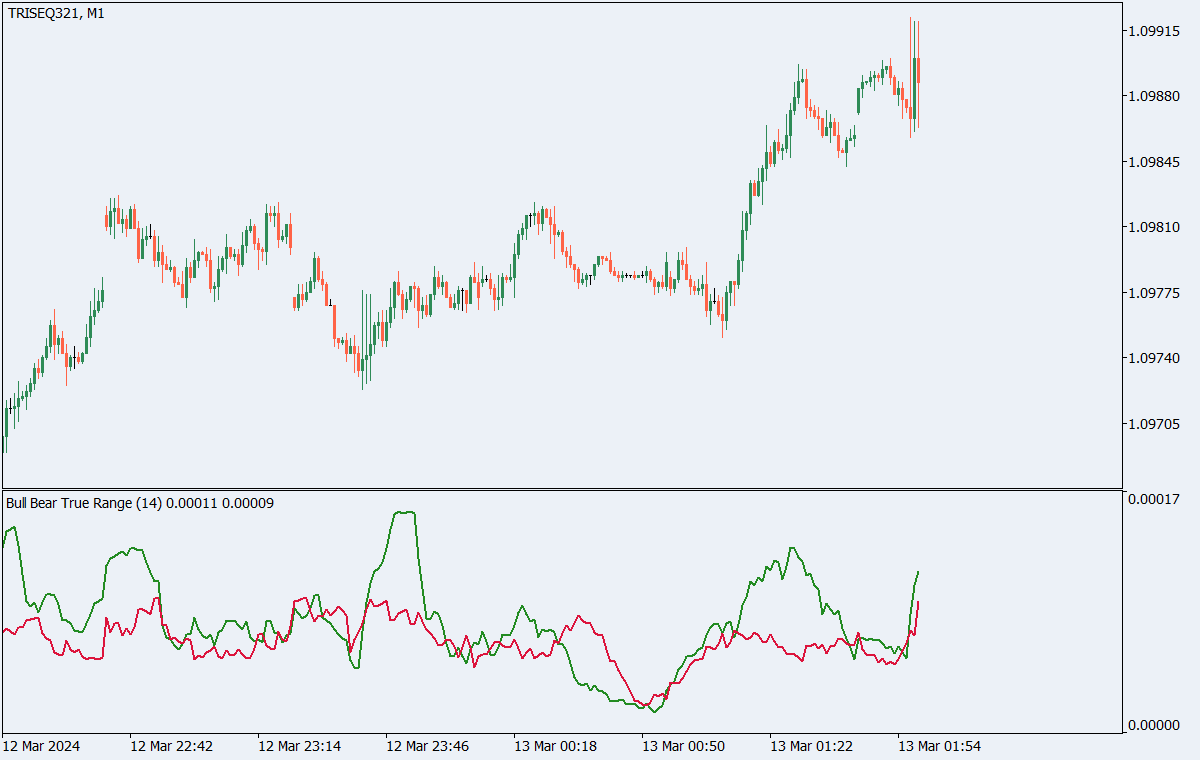
Examples with changed settings are in the manual.
Main settings
| Input | Default |
|---|---|
| Period | 14 |
| Show Bull Range | true |
| Show Bear Range | true |
Usage specifications
Forming bar
Values and drawing change with the latest bar's high, low and close. They are also recalculated when history is added or corrected or settings change.
Conditions for comparison
Compare with the same symbol, timeframe, period and loaded history. The display is not a forecast of future prices.
Starting position
No line is drawn for the first N−1 bars. By default, it starts from the 14th bar. The first bar of the history has no previous close, so the calculation starts from high − open and open − low.
Only 1 instance of the same product on 1 chart
This manual describes adding 1 instance of this product to 1 chart. To compare different settings, use separate charts.
For on-screen display only
This product shows calculation results through plot buffers and does not place orders. It does not guarantee profit or future price movement.
Full manual
How to read the display, the settings, installation and what to check when something goes wrong, on one page. The product is in preparation for release; the manual is published so that you can review its content.
- MT5 display and examples of changed settings
- How to read it in 30 seconds
- What it measures
- Situations for reading the display
- Steps for checking the display
- Installation and checking the package contents
- Settings
- Usage specifications
- Troubleshooting and usage notes
- Technical information and specification details