ATR StdDev Compare
Shows ATR, the average of true range, and the standard deviation of price in the same window, and adds a smoothed line of the standard deviation. Lets you see the difference between the two ways of measuring volatility.
Coming soon · MT5 only · no licence file needed
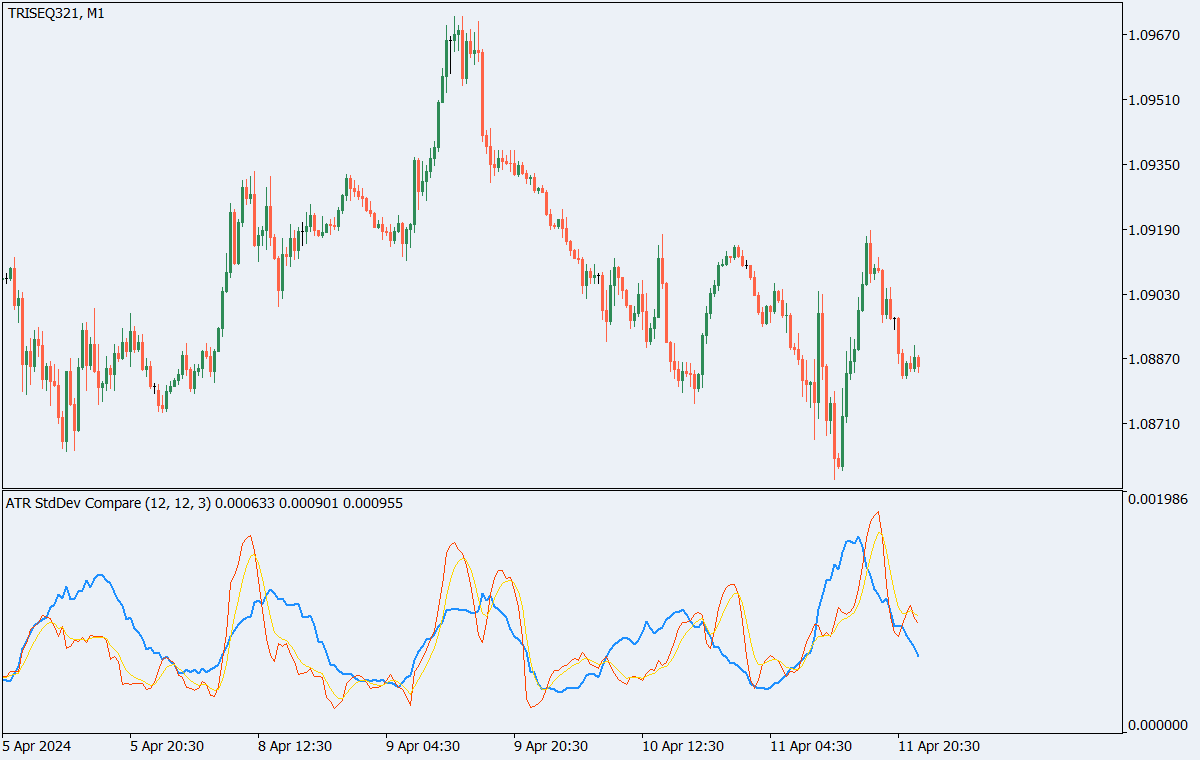
Examples with changed settings are in the manual.
Main settings
| Input | Default |
|---|---|
| ATR Period | 12 |
| StdDev Period | 12 |
| StdDev Price | Close |
| StdDev Average Period (smoothed) | 3 |
| Show Trilogy brand and QR code | true |
| Brand position (chart corner) | Lower left |
| Brand horizontal offset (pixels) | 10 |
| Brand vertical offset (pixels) | 10 |
Usage specifications
Current bar
Values on the unclosed bar change as the price updates. Do not confuse them with closed bars.
Differences between history and data feeds
Values change with the symbol, timeframe, data provider and loaded history range. Compare under the same conditions.
Brand display
The packaged version has a function that shows Produced by Trilogy Inc. and a QR code linking to https://www.trgy.co.jp/. The position and other details can be changed in additional settings. There is no account authentication.
For on-screen display only
The display is a record of calculation results. It does not direct trading decisions and does not guarantee future price movements.
Full manual
How to read the display, the settings, installation and what to check when something goes wrong, on one page. The product is in preparation for release; the manual is published so that you can review its content.
- MT5 display and examples of changed settings
- How to read it in 30 seconds
- What it measures
- Situations for reading the display
- Steps for checking the display
- Installation and checking the package contents
- Settings
- Usage specifications
- Troubleshooting and usage notes
- Technical information and specification details