Adaptive ATR
Smooths each bar's high minus low with a length that changes with how price is moving. Although the name contains ATR, the calculation differs from the standard ATR, which includes gaps from the previous close.
Coming soon · MT5 only · no licence file needed
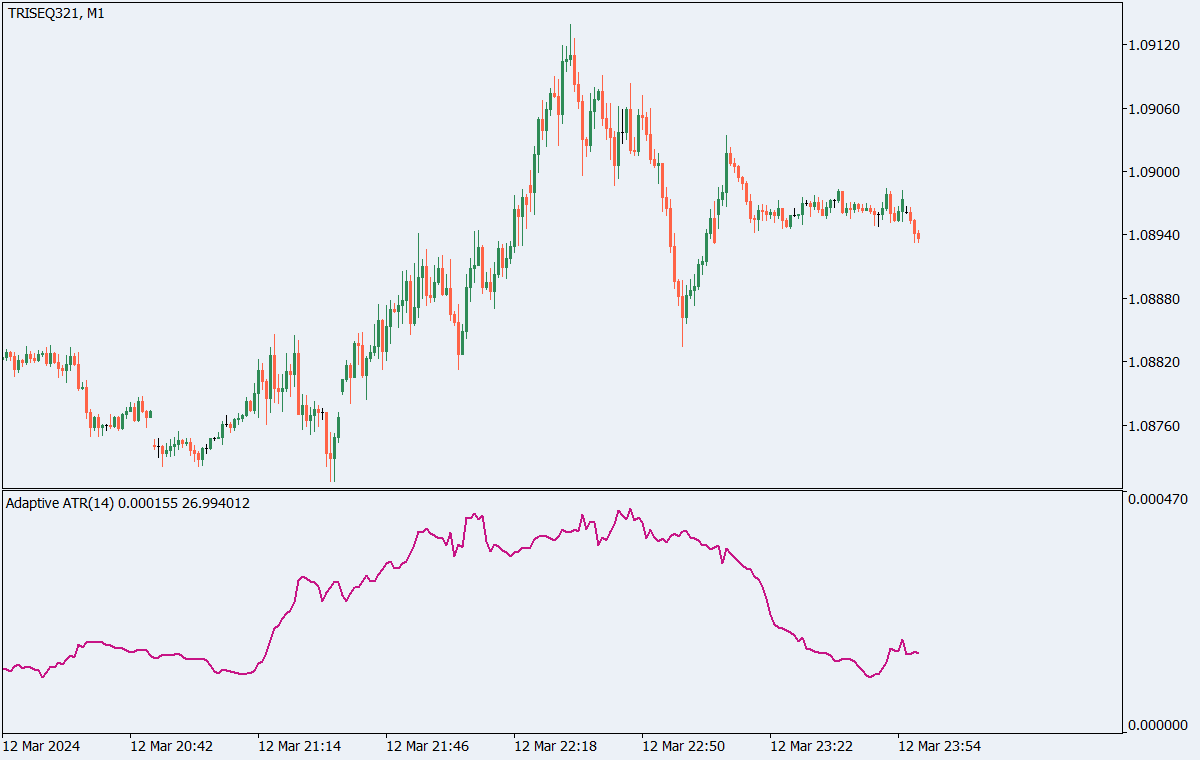
Examples with changed settings are in the manual.
Main settings
| Input | Default |
|---|---|
| Period | 14 |
Usage specifications
First display
The first N bars are hidden, and display starts from bar N+1. With the default of 14 it is the 15th bar, and with the changed example of 40 it is the 41st bar. Even in the hidden section, the internal average needed for later calculations is updated.
Period 1
The shortest setting can also be used. In this case, the lower limit of the average length is 1.
Forming bar
When the forming bar's high or low moves, the range and the average change. It is recalculated when history is added or corrected.
Scale
The upper limit of the separate window adjusts automatically. When comparing setting examples, check the scale and the values.
Only 1 instance of the same product on 1 chart
This manual describes adding 1 instance of this product to 1 chart. To compare different settings, use separate charts.
For on-screen display only
Calculated values are stored in buffers and shown as lines and bars. It does not place trade orders or issue alerts. It does not guarantee profit or market direction.
Full manual
How to read the display, the settings, installation and what to check when something goes wrong, on one page. The product is in preparation for release; the manual is published so that you can review its content.
- MT5 display and examples of changed settings
- How to read it in 30 seconds
- What it measures
- Situations for reading the display
- Steps for checking the display
- Installation and checking the package contents
- Settings
- Usage specifications
- Troubleshooting and usage notes
- Technical information and specification details